898 Bills
Thailand's parliament has a waiting line for new laws. The cabinet's bills go to the front. Most bills from MPs never get a hearing, and every time the House is dissolved, the line is cleared.
A bill is a proposal for a new law. In Thailand, three kinds of people can propose one: the cabinet, members of parliament, and ordinary citizens who collect at least 10,000 signatures.
Politigraph, an open database built by the civic tech group WeVis, records every bill: who proposed it, when, and what happened to it. We used it to follow all 898 bills put to parliament from 2019 to today.
Pick a bill to follow through the story
Its ball will wear a ring in every scene. You can also tap any ball to see which bill it is.
Inside the chamber
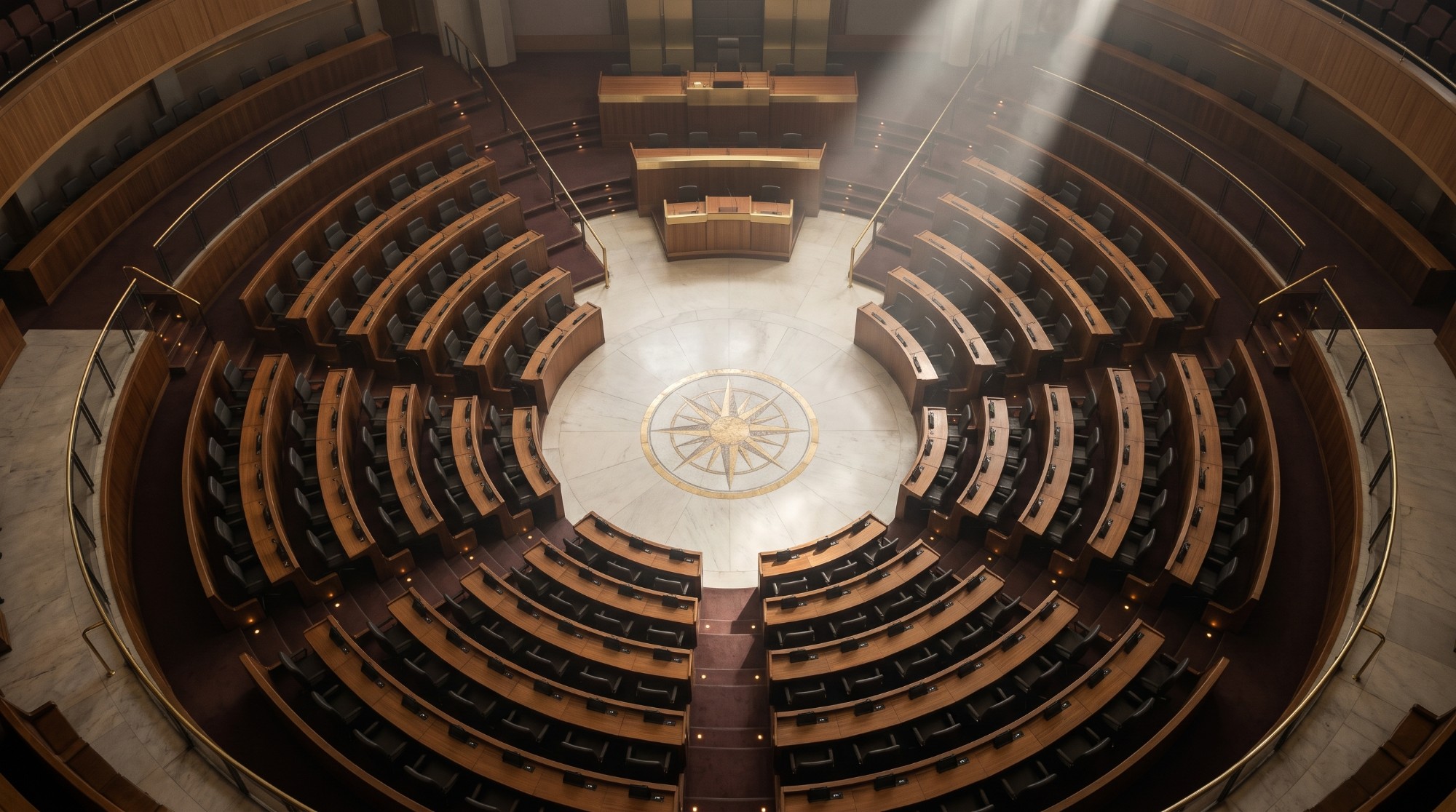
Every bill has to pass through one room: the House of Representatives, where 500 MPs sit in a horseshoe facing the Speaker. A bill becomes law only after they vote on it.
Each lamp below is one MP. Tap any lamp to see who sits there.
500 seats
This is the chamber of Thailand's House of Representatives, seen from above. Every bill needs this room.
The MPs, by party
Each lamp lights in its party's colour. This is the House elected in May 2023, as it stood in January 2024.
The two biggest parties were Move Forward and Pheu Thai.
A bill gets its vote
17 January 2024: the Clean Air Act comes up for its first vote.
443 MPs vote yes. Nobody votes no. The rest are absent.
This is what it looks like when a bill reaches the front of the line.
A bill that never did
The Climate Change Act was proposed by Move Forward MPs in December 2023, a month earlier.
It waited 24 months. This vote never happened. No lamp ever lit for it.
Lights out
12 December 2025: the House is dissolved for an election.
Every bill still waiting in line is dropped, including that one.
The line
So how many bills ever get that moment in the chamber? Here are all 898, in the order they were proposed.
898 bills
Every bill put to Thailand's parliament since 2019, in the order it was proposed. Each ball is one bill.
Only a third get a hearing
290 bills ever reached a recorded vote in parliament.
The other 608 never did.
Who gets to the front
The cabinet's bills almost always get a vote: 141 of 162.
MPs' bills rarely do: 144 of 710. Citizens' bills: 3 of 15.
And who becomes law
The cabinet: 102 of 162 became law.
MPs: 14 of 710. Citizens: none.
A bill cannot become law without a hearing, so the line decides almost everything. Four in five MPs' bills never reach a vote at all.
Is this normal?
Partly, yes. In many democracies, the government writes most of the laws, and bills from ordinary members rarely pass.
So a low success rate is not unusual. What is worth a closer look is the line itself: how long bills wait, and what happens to them while they do.
The line is cleared
When the House is dissolved for an election, every bill still waiting is dropped. That happens in other parliaments too: in the UK and Canada, unfinished bills also die at a dissolution. Thailand is a little gentler. A new cabinet has 60 days to bring a lapsed bill back.
Most bills that fail are never rejected. They run out of time.
Two dissolutions
The House was dissolved on 20 March 2023 and again on 12 December 2025.
The 277 red bills were still waiting each time, and were dropped. Here they are, by the month they were proposed.
Whose bills were lost
Now split the same bills by who wrote them.
Almost all the lost bills were MPs' bills: 247 of the 277. The cabinet lost 22.
How long they waited
Each column shows how many months a lost bill had been waiting when the House was dissolved.
The typical one had waited 13 months. 37 had waited more than two years. 246 of the 277 never reached a vote.
Every ending
Here is every way a bill can end. Running out of time is the biggest pile.
Losing a vote is rare: only 24 bills were ever voted down.
The prime minister's pen
One more gate: if an MP's bill involves public money, the prime minister must sign off on it before the House can debate it.
46 bills were stopped there.
Most MPs' bills never reach the floor at all. They join a queue, and the queue is cleared at every election.
Is it the parties?
Maybe one party is just bad at writing laws. The numbers say no. Every party's MPs face the same line.
One note for readers outside Thailand: Move Forward won the most seats in 2023, but a court dissolved the party in August 2024. Its MPs moved to a new party, the People's Party. So those two rows are largely the same group of MPs.
The people behind the bills
These are the 150 MPs in the 2023 House who were lead proposer of at least one bill, grouped by party.
Tap any face to see who it is.
Sized by bills led
The bigger the face, the more bills that MP led. A handful of MPs wrote a large share of all MP bills.
Whose bills became law
Faces glow green if at least one of their bills became law.
Everyone else is still waiting, or was cleared.
Same line for every party
These are the bills written by MPs, grouped by the MP's party at the time.
No party got more than 4 of its own bills into law. Many People's Party bills are still waiting.
898 bills, one parliament
Put them all back together. The green ones made it.
What it adds up to
Thailand's parliament does not reject most bills. It never gets to them.
The cabinet's bills are heard, and most become law. Most MPs' bills wait in line until the House is dissolved, and then the line is cleared.
So if you want to know why a law you care about never happened, the answer is usually not a vote. It is the queue.
Look up any bill
Every ball in this story is a real bill, with a name, a date, the people who proposed it and its full history. You can search all of them yourself.
Open Politigraph →How we did this
- We downloaded all 898 bills and the votes from the Politigraph GraphQL API on 5 November 2026.
- MP photos, English names and profiles come from Politigraph (WeVis). Photos were shrunk into one small image sheet for this page.
- The chamber shows the 499 MPs recorded in the Clean Air Act's first reading on 17 January 2024. Seats are grouped by party for illustration; this is not the real seating plan. "Bills led" counts bills where the MP is a lead proposer. The chamber illustration was generated with Flow.
- "Reached a vote" means Politigraph records at least one vote on the bill. Votes are published only after they are checked, so this may slightly undercount: 8 bills that became law have no vote recorded yet.
- "Ran out of time" means Politigraph gives the House dissolution as the reason the bill fell. "PM said no" means the prime minister refused to endorse a money bill. We grouped the other rejection reasons the same way.
- Waiting time runs from the proposal date to the dissolution on 20 March 2023 or 12 December 2025.
- "Merged" means the bill was combined with another draft on the same subject. A bill's party is the party of its first-named MP on the day it was proposed.
- Comparisons, to confirm before publishing: 1 Hansard Society, private members' bills that received Royal Assent by session, 2010–12 to 2024–26. 2 Spooner Labs count of the 118th Congress: 274 of 16,565 bills and joint resolutions signed into law. Systems differ, so these show the general pattern, not an exact ranking. Lapse rules: House of Commons Library (UK wash-up), Senate of Canada (bills "die on the Order Paper"), Thai Constitution section 147 (60-day revival).